
GAME CONCEPTS: SIZE
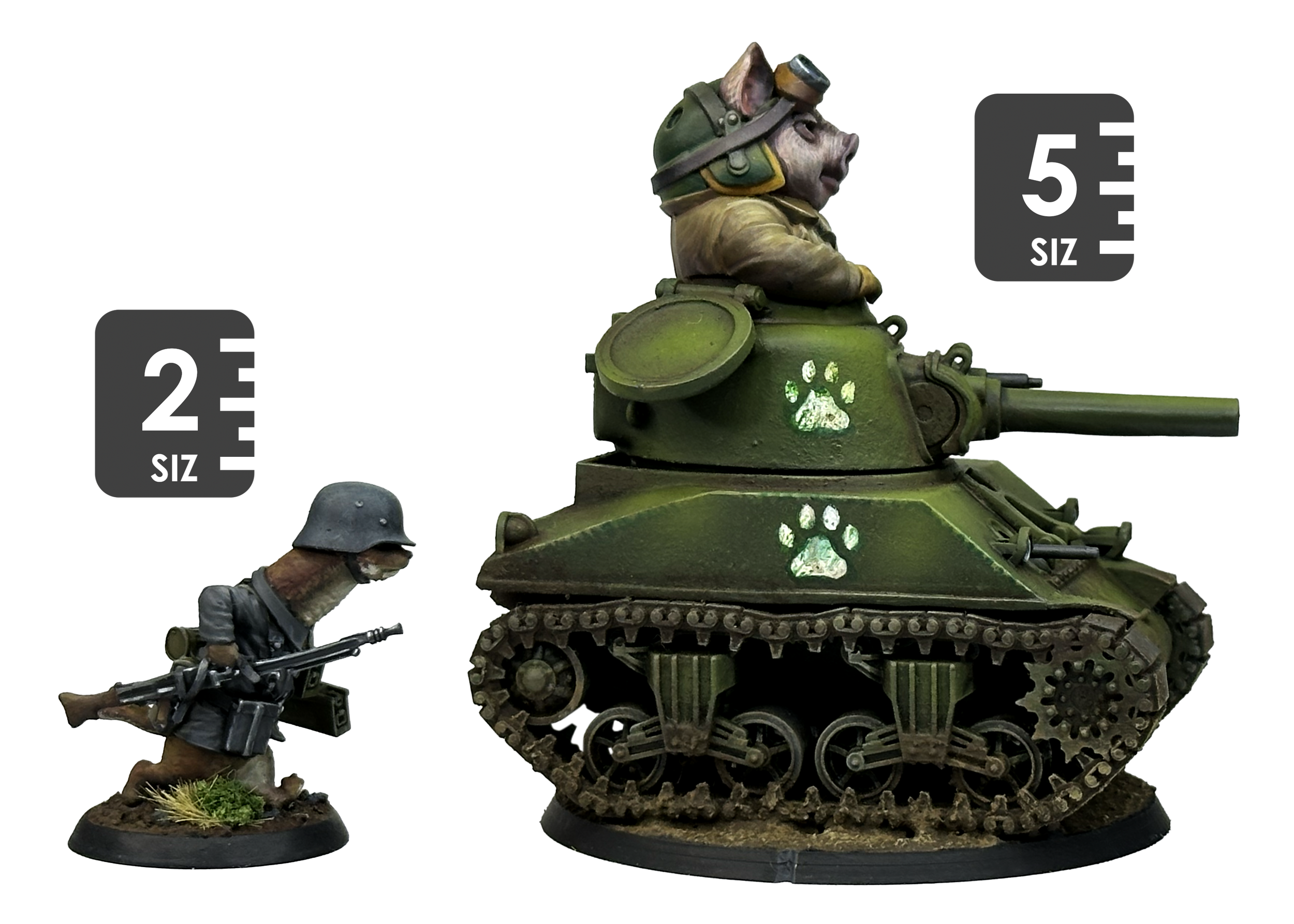
The Ferret Gunner is an average sized Infantry unit at SIZE 2, whereas the Wilbur Tank is a medium sized vehicle at SIZE 5
“It’s not the size of the dog in the fight, but the size of the fight in the dog.”
Because World War Zoo depicts all different kinds of animals, the SIZE of the various units is an integral aspect to gameplay. All units have a Size (abbreviated SIZ) from 1-6 printed on their unit card, and a corresponding base-diameter for their miniature:
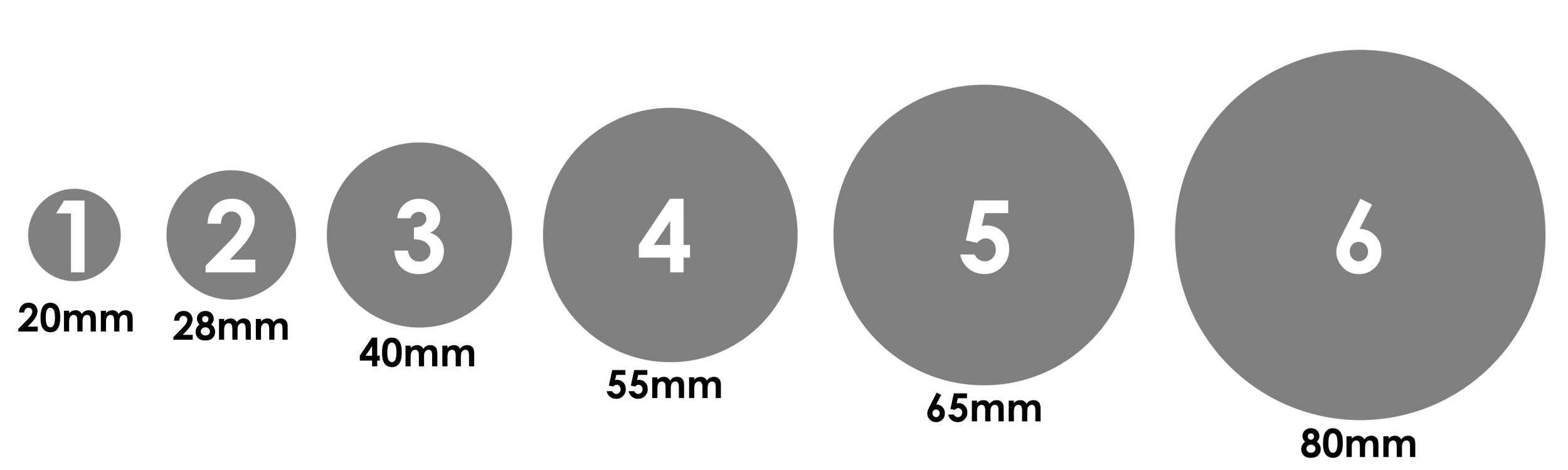
Unit Sizes and their base diameters
Size 1 (20mm base) represent the smallest creatures, including things like rats, mice, frogs, moles, stoats, etc.
Size 2 (28mm base) are the most common and widest scale range of animals in World War Zoo, and cover creatures such as rabbits, ferrets, sables, hedgehogs, squirrels, cats, skunks, and even some small dogs.
Size 3 (40mm base) includes most dogs, foxes, tortoises, raccoons, otters, komodo dragons, and even wolves.
Size 4 (55mm base) covers bears, buffalo, deer, and other large animals. There are also some small vehicles, such as armored cars and jeeps, which fit into this category.
Size 5 (65mm base) are medium sized vehicles. Most tanks and other armored vehicles like halftracks fall into this category.
Size 6 (80mm base) is reserved for the largest vehicles, such as large tanks, as well as some artillery type units.
Some animals may not read as the size you would expect due to the extenuating circumstances of their kit. For example, the Motherland Anti-Tank Gun is a chipmunk which would likely be Size 1, but its large weapon increases it to Size 2. The Wildfront Mouse Mortar, likewise, includes multiple mouse characters along with the mortar, bringing it to Size 4. The Sunstrike Motorcycle Marten is Size 3 due to the motorcycle, etc.
A key principle in the game of World War Zoo is “Size Order”. In simple terms, Size Order means that large units are activated for deployment and movement before smaller units. This generally means that small units have the advantage of being able to react to large units, and that they can maneuver in a way that allows them to choose the terms of engagement.
Whenever the game calls for something to be done in Size Order, players alternate (starting with the player with Initiative) activating ALL of their Size 6 units, then all of their Size 5 units, then Size 4, 3, 2, and 1. Depending on the composition of a player’s Army and whether some of their units have been destroyed, this may mean that a player with initiative is activating AFTER the player without, and/or could involve one player activating many units before the other player next gets a chance to activate their units (possibly activating several sizes in a row).
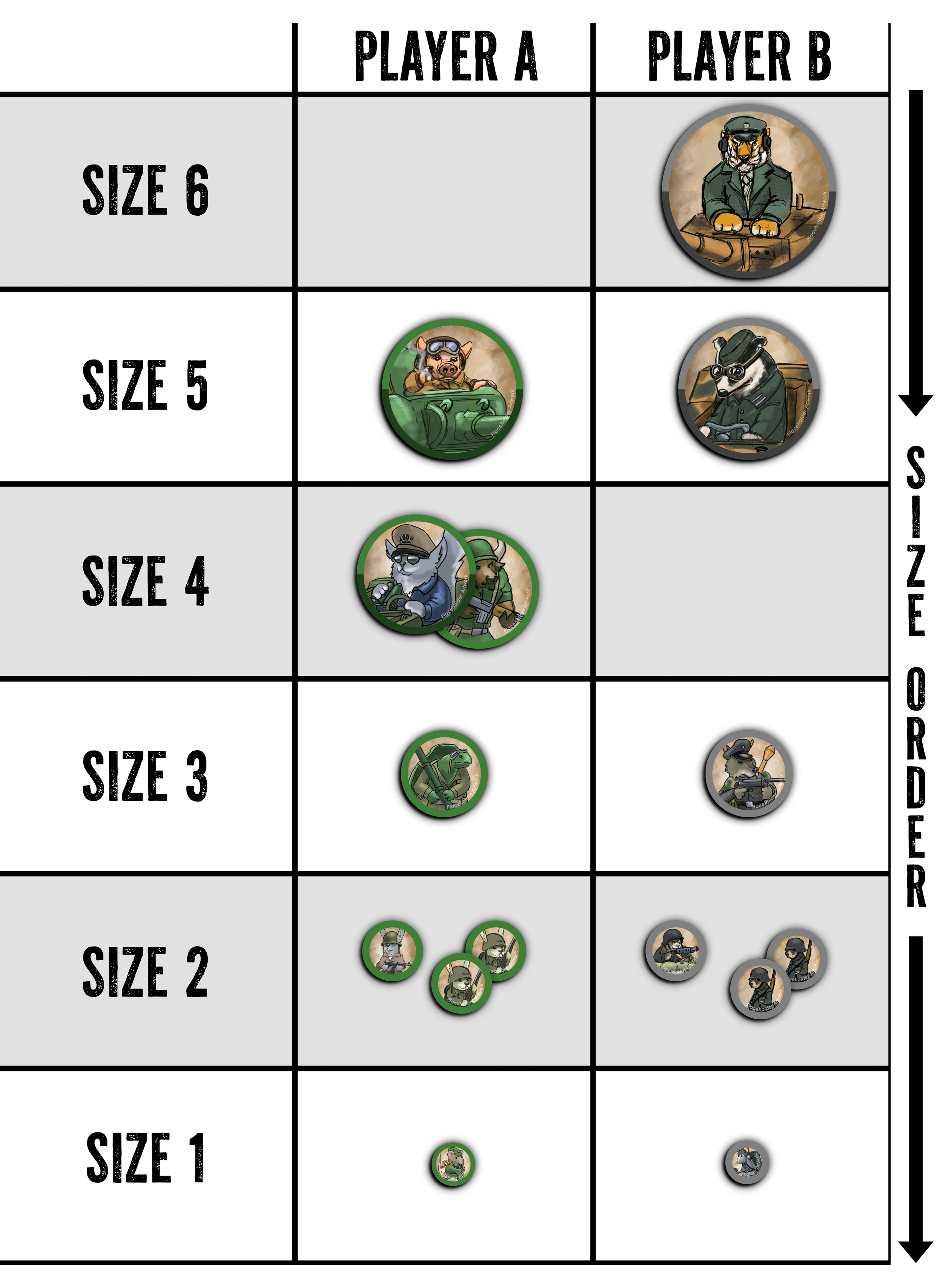
Units activate in Size Order during the Movement Phase. In the example above, even if Player A had Initiative, Player B’s Tiger Tank would activate first. All of a player’s unit’s of a given size activate before the other player.
Although activating units of a given Size first during the movement phase can typically be seen as a disadvantage, there are times where moving first can be beneficial. Namely, because melee combat occurs primarily during the movement phase, and because Size Order dictates that ALL units of a given size are activated at the same time, this can allow groups of units of like size to perform multiple close combat attacks before the opponent has an opportunity to react… and may be particularly devastating if the units gang up on a single enemy. It helps to think ahead - getting attacked in melee by your opponent this turn may be the result of a failure to focus your shooting in the previous turn.
Speaking of shooting, unit Size, or rather, the Size of the TARGET, is also important when it comes to Shooting Attacks. Ranged weapons have varied To-Hit numbers for each of their three range bands (Short, Medium, and Long Range) - generally a weapons will have an ideal range band that it is most accurate in and will fall off in accuracy in its other Range Bands. However, a Shooting Attack can always substitute a Unit’s SIZE as the To-Hit number for a Shooting Attack, regardless of the Range Band. This can make larger units much easier to hit than small ones. Likewise, it makes weapons like tank main guns which tend to have low natural To-Hits not well-suited to attacking very small creatures.
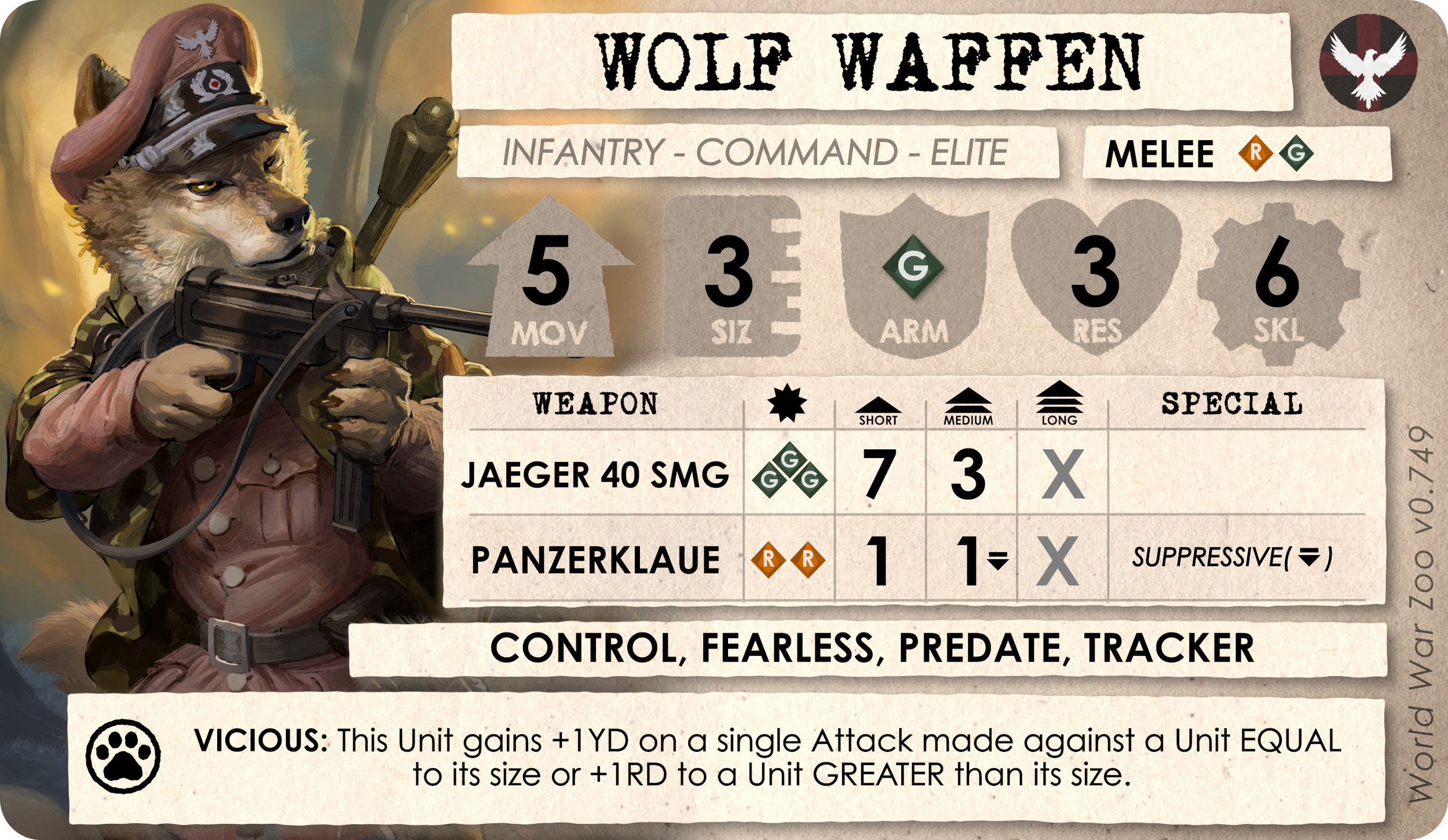
The Size 3 Wolf Waffen can use its VICIOUS Instinct to gain bonus attack dice against a unit of equal, and an even better bonus against a LARGER opponent.
Size has some tertiary effects in the game as well. For example, larger units attacking smaller units in close combat gain Advantage to their rolls due to the size disparity, and the “Vicious” Instinct, when triggered, gives the attacking unit bonus dice for attacking enemy units that are bigger than they are. Size, likewise, affects the kinds of terrain that offer a given unit Cover. No doubt as the game continues to expand, there will be numerous opportunities for unique unit sizes and size effects.